Work / dossier
KOTIVA
A premium skincare brand in the Gulf. Successive site versions shipped without ever destabilising the live entity — currently in client review behind a frozen, promotion-gated surface.
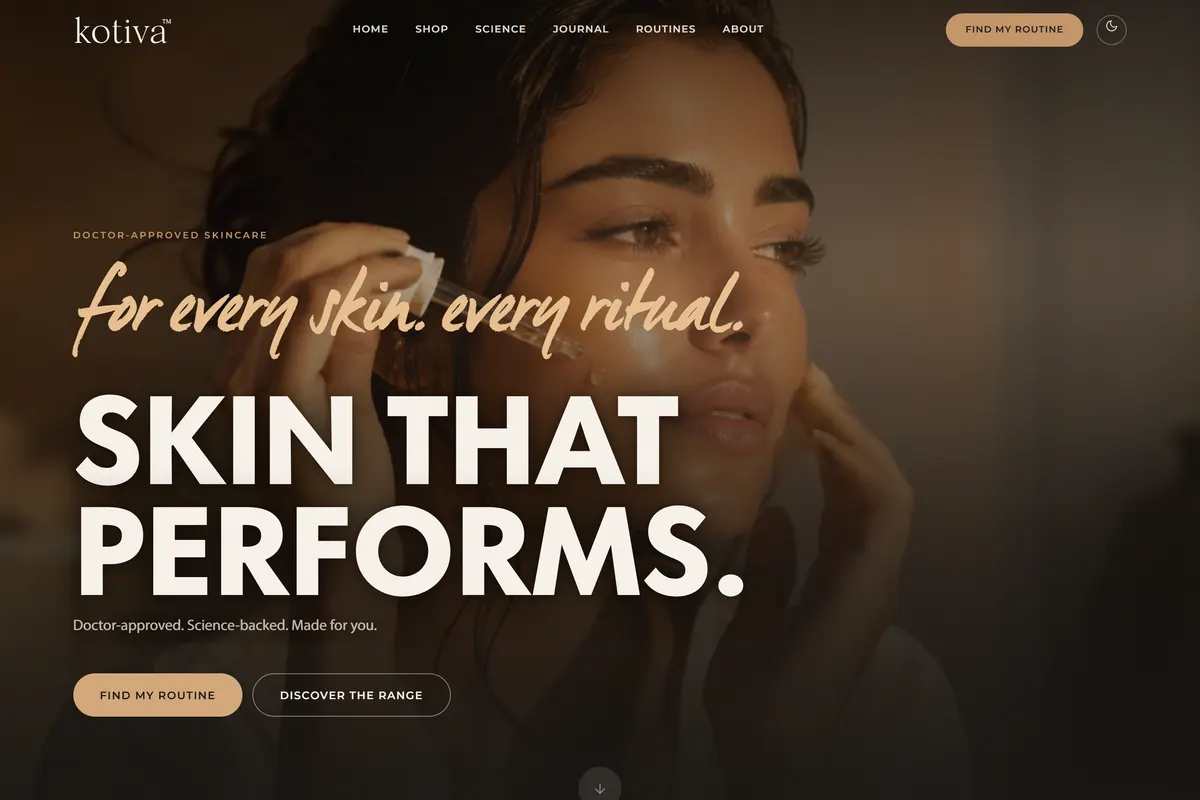
The record.
First version live; successive redesigns explored and retired without touching the running entity.
Client-approved baseline tagged immutably — approval protects the experience, not the implementation.
Four review cycles promoted to the frozen review surface, each an atomic, operator-gated replacement with a written release summary.
Corrections, left visible.
The entity that taught this practice the most. Three of its incidents are now named patterns, checked on every release of every site.
One CSS line to stop sideways scroll is cosmetic.
That line silently stops images loading in Safari — a documented engine behaviour with no error message.
The pattern is a named trap; every release is swept for it in WebKit, not just Chrome.
It works in Chrome, so it works.
Safari showed zero of the shop’s twenty-five products — a timing difference in how the engine reports what is visible.
Two browser engines gate every release; the product grid is verified populated in both.
Fixed in the file, therefore fixed.
The CDN kept serving a week-old copy to every visitor — the file’s versioned address was never bumped.
Release checks fetch the exact addresses the live page requests and inspect the cache’s answer.
Iteration without breakage. The client sees a stable surface that changes only when they approve it; the practice absorbs the risk behind a gate — and the incidents this entity surfaced now protect every other one.
Working together
Client work starts with a conversation — no commitment, no pitch. If it turns out I'm not the right fit, I'll say so.